
In highway construction and maintenance, PP geogrid has become an indispensable new material for improving roadbed stability and extending its service life. This article will analyze its core functions and advantages.
Why is pp geogrid necessary?
Highway roadbeds are subjected to the long-term and repeated effects of vehicle loads, which can easily lead to problems such as uneven settlement, cracks, and slope collapse. PP geogrid, with its unique mesh structure, provides efficient reinforcement and reinforcement for the soil, fundamentally addressing these challenges.
Three Key Functions of PP Geogrid
1. Reinforcement and Increased Bearing Capacity
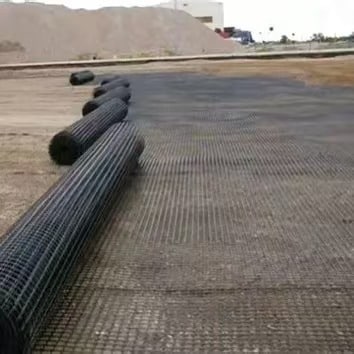
Principle: When pp geogrid is laid in the roadbed, its interlocking force and friction with the filler disperse localized loads over a wider area, significantly improving the overall stiffness and bearing capacity of the foundation and effectively preventing rutting and settlement.
2. Separation and Isolation to Prevent Mixing
Principle: Installed between the roadbed and soft foundation, or between different soil layers, pp geogrids provide isolation, preventing stone from sinking into the soft soil or the mixing of fillers of different particle sizes, thereby maintaining the independence of each structural layer.
3. Slope Protection and Stability
Principle: Installing pp geogrids on embankment slopes enhances soil shear strength, restrains lateral displacement, and significantly improves slope stability, preventing rainwater erosion and landslides.
How to choose the right product? Focus on key indicators
Selecting a high-performance polypropylene geogrid is crucial to project success. The following are key technical indicators for evaluating its performance, for your reference when selecting a product:Selecting a high-performance polypropylene geogrid is crucial to project success. The following are key technical indicators for evaluating its performance, for your reference when selecting a product:
| Índice técnico de la geomalla unidireccional (GB/T17689-2008) | ||||
| Especificación del producto | Resistencia a la tracción(kN/m) | La resistencia a la tracción de 2% alargamiento(kN/m) | La resistencia a la tracción de 5% alargamiento(kN/m) | Alargamiento nominal (%) |
| TGDG35 | ≥35.0 | ≥10.0 | ≥22.0 | ≤10.0 |
| TGDG50 | ≥50.0 | ≥12.0 | ≥28.0 | |
| TGDG80 | ≥80.0 | ≥26.0 | ≥48.0 | |
| TGDG120 | ≥120.0 | ≥36.0 | ≥72.0 | |
| TGDG160 | ≥160.0 | ≥45.0 | ≥90.0 | |
| TGDG200 | ≥200.0 | ≥56.0 | ≥112.0 | |
| Technical index of Bi-directional Stretching Geogrid (GB/T17689-2008) | ||||
| Especificación del producto | Tensile strength (MD or CD) (kN/m) | The tensile strength of 2% elongation (MD or CD) (kN/m) | The tensile strength of 5% elongation (MD or CD) (kN/m) | Nominal elongation (MD or CD) (%) |
| TGSG1515 | ≥35.0 | ≥5.0 | ≥7.0 | ≤15.0/13.0 |
| TGSG2020 | ≥20.0 | ≥7.0 | ≥14.0 | |
| TGSG2525 | ≥25.0 | ≥9.0 | ≥17.0 | |
| TGSG3030 | ≥30.0 | ≥10.5 | ≥21.0 | |
| TGSG3535 | ≥35.0 | ≥12.0 | ≥24.0 | |
| TGSG4040 | ≥40.0 | ≥14.0 | ≥28.0 | |
| TGSG4545 | ≥45.0 | ≥16.0 | ≥32.0 | |
| TGSG5050 | ≥50.0 | ≥17.5 | ≥35.0 | |
Why choose polypropylene?
- Corrosion resistance: Highly resistant to common soil acids, alkalis, and microorganisms, resulting in a long service life.
- High toughness: High impact resistance, adapting to foundation deformation without breaking.
- Easy installation: Lightweight and packaged in rolls, installation is simple and efficient, significantly reducing construction time.
Looking for a complete technical data sheet or free samples?
Haoyang Environmental offers a variety of polypropylene geogrids (unidirectional and bidirectional) in various specifications, all in strict compliance with national standards. Our technical team can provide free selection consultation and installation guidance.


 English
  Español de México
  Português do Brasil
  Русский
  Türkçe
  Bahasa Indonesia